By Brandon McKinley
As over 600,000 Coloradans waited weeks to receive their monthly grocery budgets in November, Metro Caring increased food distribution to meet people’s emergency needs thanks to the outpouring of support from our community.
The Supplemental Nutrition Assistance Program, or SNAP, offers people monthly allowances to buy food at grocery stores and farmer’s markets, if their income is low. In November, the United States Department of Agriculture refused to distribute SNAP benefits during the government shutdown, despite having contingency funding intended for emergency situations like this to cover at least partial benefits.
Community members like Laurie-Ann worried about losing access to nutritious groceries.
“I earmark my SNAP benefits for protein, milk, eggs, and some fresh veggies,” she said. “If they don’t process benefits, that’s all going to be exempt from my diet.”
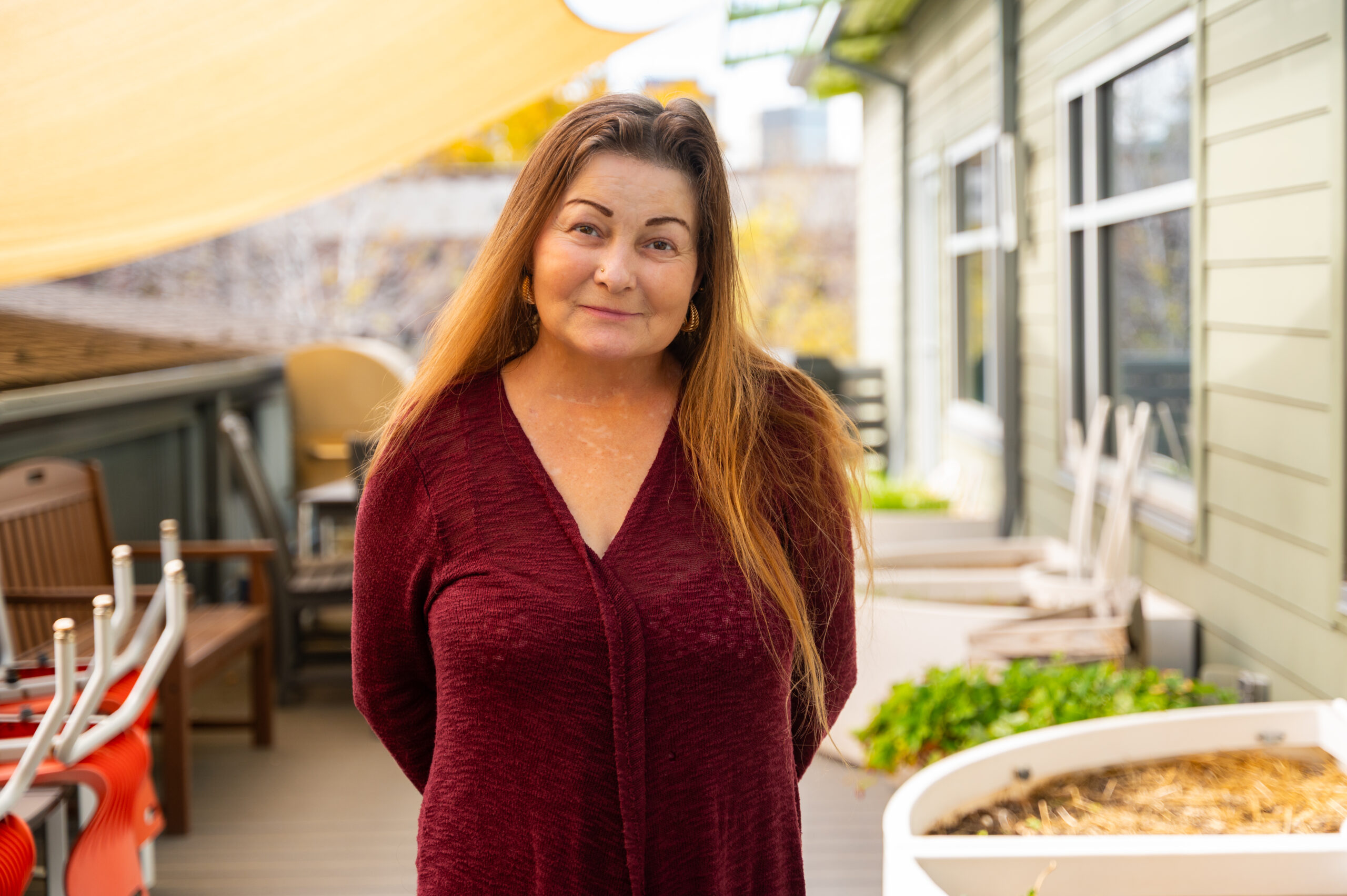
Laurie-Ann says calling SNAP “supplemental” is a misnomer. SNAP is her main grocery budget and tearing it away is detrimental to eating a healthy diet, especially as someone juggling cancer treatment bills not covered by insurance. Photo by Brandon McKinley.
Metro Caring quickly launched an emergency fundraising campaign to purchase additional food for our Fresh Foods Market shelves and welcome more community members. Within four weeks, our community raised nearly $230,000 and hosted over 30 food drives. This support allowed us to increase appointments to our Fresh Foods Market and begin distribution of pre-packaged boxes on Mondays to serve more people.
“Places like Metro Caring become even more important in times like this,” Laurie-Ann said. “This is where you can get some fresh produce, the place where we can get nutritionally sound food.”
Shifting operations to welcome more people
Monday mornings in Metro Caring’s parking lot look even busier than normal. Multiple white tents and tables are stationed along the backside of the building. As some volunteers roll out the shopping carts, others in bright green safety vests began to direct traffic.
Meanwhile, in the warehouse, 500 boxes full of dry goods—thanks to Sunday afternoon volunteers putting in extra hours—await final packaging of fresh produce before being rushed outside.
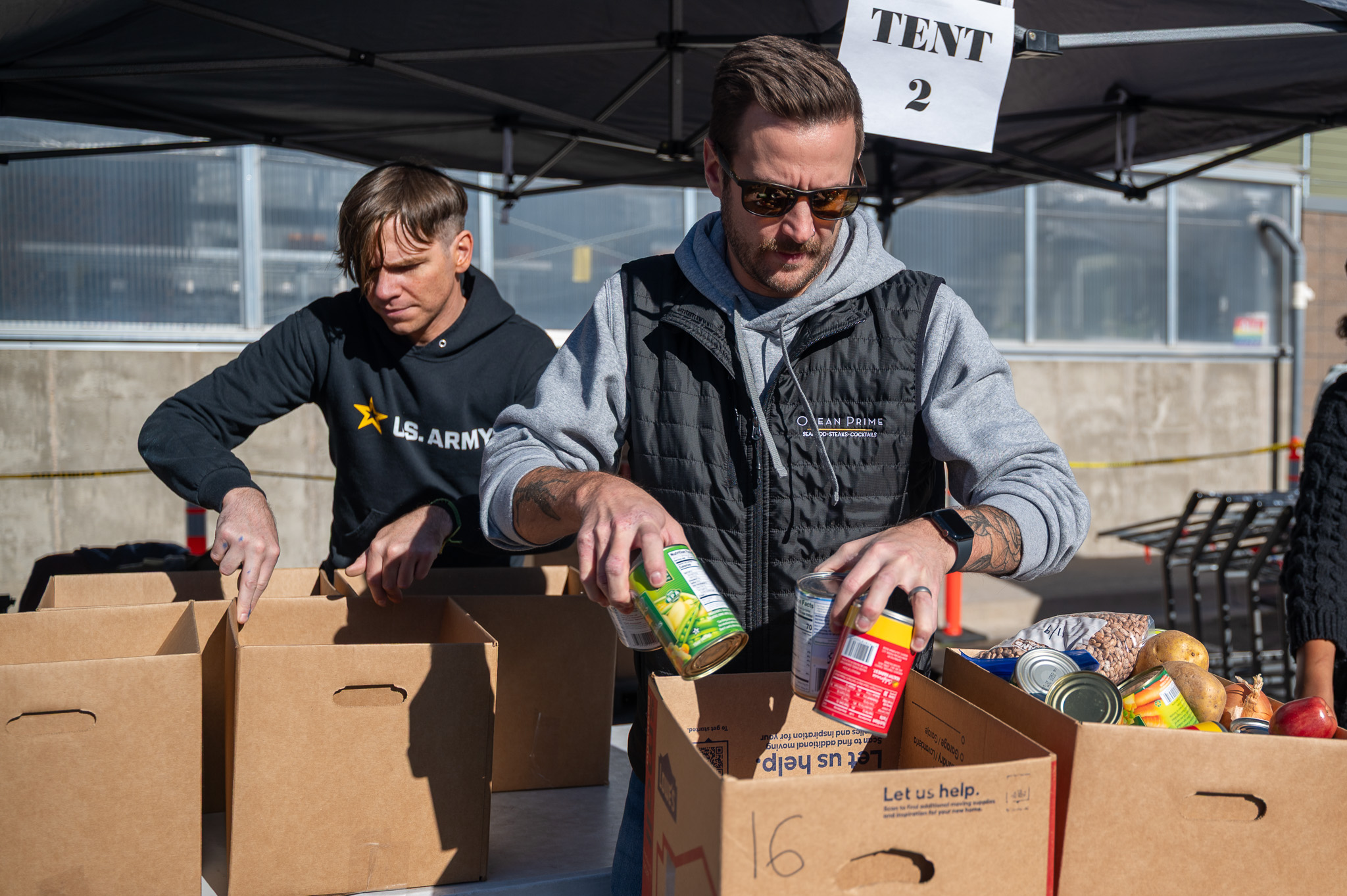
After checking in at the first tent, community members grab a cart, which is loaded with the prepackaged food boxes. As they move down the line, everyone is offered two dozen eggs, a choice of two packages of meat, and a selection of dairy and refrigerated products. Photo by Brandon McKinley.
On Mondays throughout the rest of 2025, the Fresh Foods Market will be closed to accommodate the boxed food distribution, which is open for six hours during the day. The change allows us to invite more people to access food than on a typical Monday.
Emily Settlecowski, Metro Caring’s food access manager, said a key ingredient to making this shift was simply having enough food to share. All the items in the boxes are purchased, which is only possible thanks to our community’s donations and the credits Metro Caring received to buy food from Food Bank of the Rockies as part of the $10 million in emergency funding released by the state of Colorado.
Community choice remains part of the package
Community members repeatedly tell us that being able to choose items from the shelves of the Fresh Foods Market is far more useful and dignified than receiving a prepackaged box of random groceries.
However, the Food Access team has been able to leverage data gathered over the past two years to better inform what the Monday boxes contain. The team conducted research with Fresh Foods Market visitors to understand what foods people consider essential items, across cultures and diets. After surveys and interviews with hundreds of community members, the team identified a list of market staple items, which include rice, dried beans, canned tomatoes, onions, and potatoes. These are the items we packaged into the boxes, making them far more community-informed than random leftover items.
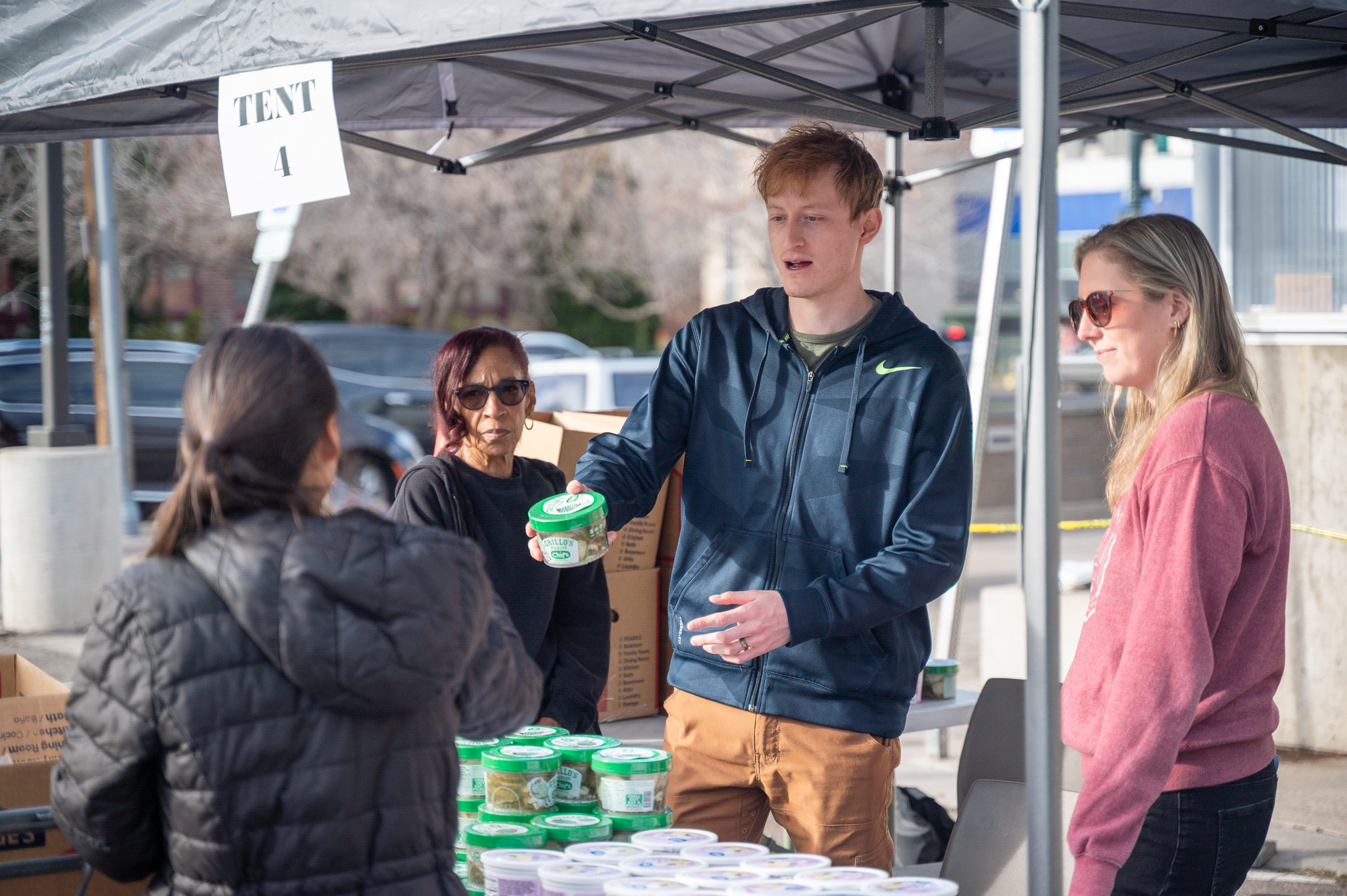
To return some dignity of choice, the final tent invites community members to leave behind any items from their box they won’t eat so that others can take it home. Bread, dairy, and other refrigerated items are also available.
Community members can also still choose their meat items and if they’d like eggs, just as in the market, and at the final tent, people are invited to pick up bread, dairy, and refrigerated items.
“Packaging the boxes with our market staple items is only possible when you have guaranteed inventory,” Emily said, “and the only reason we have guaranteed inventory is because of our community’s generous financial support and the state’s emergency funding.”
SNAP remains essential for preventing hunger
Blanca is a mom of two teenage boys. Her oldest son has Type 2 diabetes and Down syndrome, and she plays a major part in helping him manage his health. Over the past year, focusing on a protein-rich diet has helped him achieve a healthier weight.
“I spend all of my SNAP benefits on proteins for him,” Blanca said, “like red meat, pork, chicken, fish, eggs.”
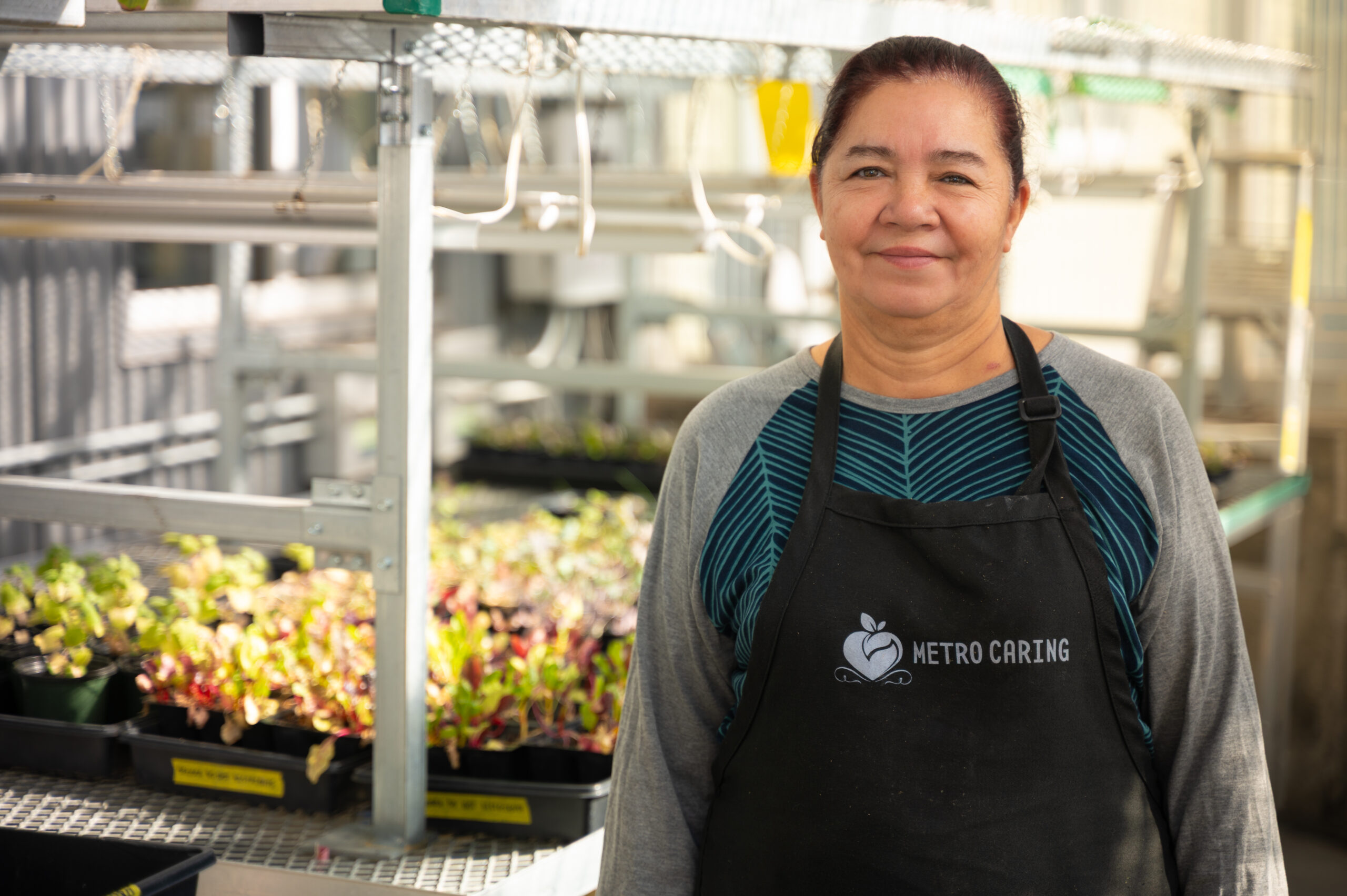
As a mom, Blanca finds SNAP essential to choosing the groceries she and her kids need. Photo by Brandon McKinley.
SNAP remains one of the most effective programs in reducing hunger in the United States because it allows community members like Blanca to maintain their agency and dignity to make the choices their families need.
Emily said that SNAP also helps seniors use grocery delivery services and allows people to double their benefits when purchasing produce, including at farmers’ markets during the season.
Future SNAP reductions threaten to increase hunger
After nearly three weeks of delay, the state of Colorado was finally able to release November SNAP benefits. However, new restrictions and longer-term cuts to the program are planned as part of the House Resolution 1 budget bill that passed Congress this summer.
“I’m concerned because, despite the incredible response from our community to meet this moment, it’s ultimately the government’s responsibility to ensure that folks have access to food,” Emily said. “Food is a human right, and under several international human rights treaties, the U.S. government is obligated to uphold its commitments to our rights, not undo the progress and impact of programs like SNAP.”
The last time SNAP was reduced, in 2023, we saw double the number of households visiting Metro Caring, far beyond the number of people visiting us at the height of the COVID-19 pandemic.
“We will always try our best to meet our community’s emergency needs, but I’m worried because these emergency moments are becoming longer and part of the status quo,” Emily said. “Food pantries were created 60 years ago to be a short-term solution to people experiencing hunger, but they were never meant to exist as somebody’s only food resource. Over time, we’ve normalized how much of our population is going hungry.”
Local efforts offer hope of new, stronger solutions
Despite federal chaos during the most recent government shutdown, we did see city and state governments in Colorado step up. In addition to the state’s $10 million in emergency funds, the City of Denver launched a task force and food drives at recreation centers.
While the federal administration continues to use SNAP as a political tool, we can look at strengthening our local food system and addressing the other root causes that force people to choose between keeping a roof over their head, seeking the medical care they need, and putting dinner on the table.
“Coloradans have shown that we care deeply about our food system, the people who grow our food, and all of us who eat it,” Emily said. “Coloradans vote repeatedly to fund free school meals, run citywide food drives, and donate hundreds of thousands of dollars to local food organizations. That gives me hope that we can be creative with new ideas and programs for our city and state that ensure everyone’s right to nutritious food is protected, respected, and fulfilled.”
To all our volunteers who have helped us make the Monday distribution change possible, Emily shared deep gratitude for all the extra hours, the flexibility to learn new roles, and the physical labor of lifting many more pounds of food.